The company has a product demo that lands well. A few customers are leaning in. Payroll is getting real, product work isn't cheap, and the founder is staring at the same question many Seattle startups hit earlier than expected: who should come onto the cap table first?
That decision often starts with angel business investors. For Washington founders, that doesn't just mean finding someone willing to wire money. It means choosing a counterparty who fits the company's stage, understands the sector, and won't create legal or governance drag six months later when the next round appears.
In the Pacific Northwest, that judgment call matters more than many founders realize. Seattle's startup community is tightly networked, sector-specific, and relationship-driven. A strong angel can provide product feedback, introductions, hiring help, and credibility with later investors. The wrong one can slow decisions, over-lawyer routine issues, or push terms that look harmless in a first draft but age badly.
Understanding the Angel Investor Landscape
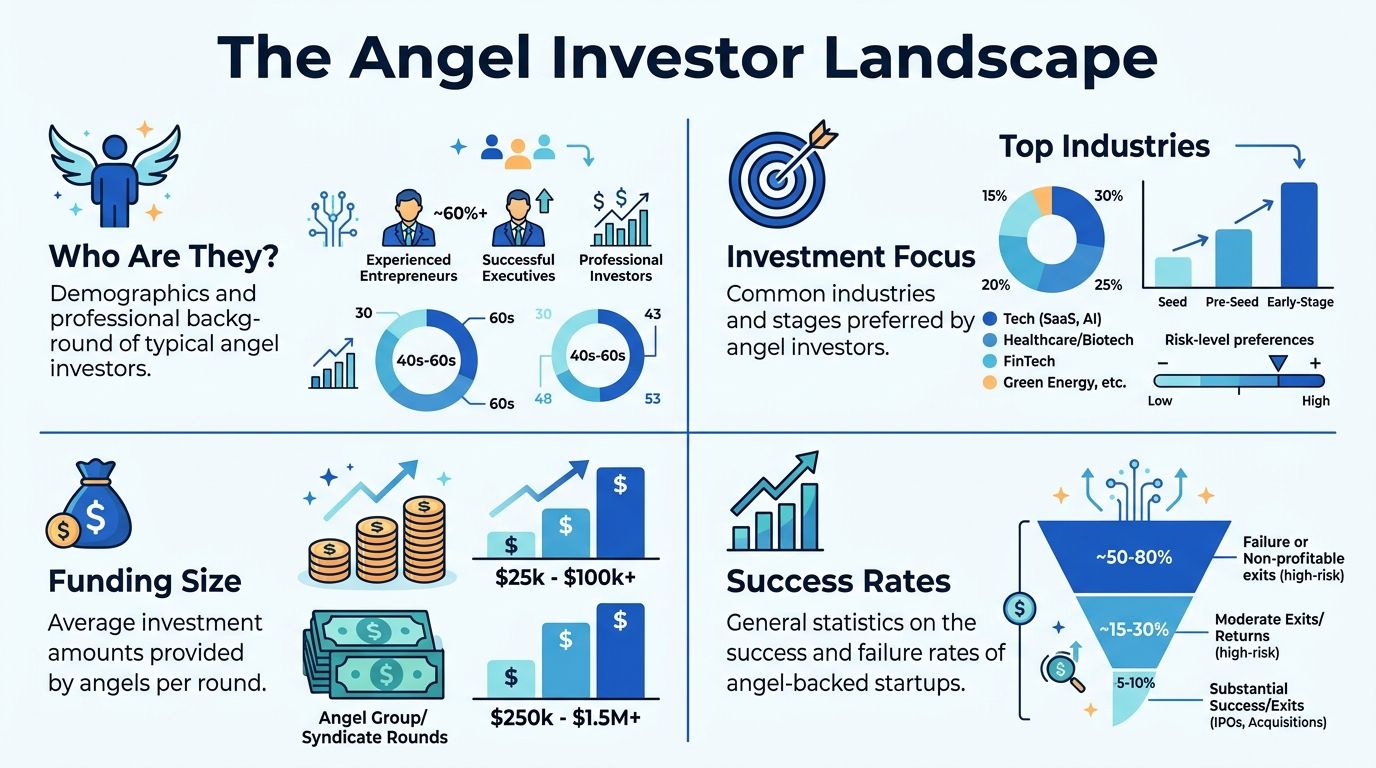
Angel investors sit in the space between bootstrapping and institutional venture capital. They're usually the first outside investors after founders, and often after friends-and-family money. The Angel Capital Association's overview of angel investing describes angels as high-net-worth individuals who meet the SEC's accredited investor standard and invest their own funds into early-stage companies, typically seeking scalable businesses that can produce strong returns.
That broad definition is useful, but it doesn't capture why angels matter so much in practice. Founders usually meet angels when the company is still proving something essential: customer demand, pricing, technical feasibility, or founder-market fit. Venture funds may still view the company as too early. Banks aren't a fit. Revenue may be emerging, but not enough to fund growth.
What makes angels different
Angel investors differ because they bring operator judgment, customer introductions, and recruiting help, plus pattern recognition from past startup cycles. Money is only part of the story.
The capital profile is also distinct. In 2023, there were approximately 63,000 active angel investors in the U.S., with reported investments averaging about $420,000 per investor on an annualized basis. Individual checks often cluster around $25,000 to $35,000 according to Qubit Capital's summary of angel investor expectations. That check-size range explains why angels are often the practical bridge between early product work and a more formal seed round.
A founder comparing funding sources should think about the differences this way:
| Funding source | Typical role | Usual fit |
|---|---|---|
| Friends and family | Relationship capital | Earliest trust-based support |
| Angel investors | Strategic early equity capital | Pre-seed and seed companies proving the first signals |
| Venture capital | Institutional growth capital | Companies with stronger traction and fund-scale potential |
For founders building a financing roadmap, it helps to understand how an early round fits with later financing mechanics and dilution. A useful overview appears in this guide to startup funding and seeding.
Practical rule: An angel round should buy time, milestones, and better options. If it only buys time, the round was probably too small or poorly structured.
Why this market still rewards focus
This market still rewards focus because angel investors are not interchangeable. Look for investors with the right fit, like sector know how, matching stage, and local reputation.
Founders who want to find US angel investors should start with fit, not volume. Sector familiarity, stage alignment, and reputation inside the local ecosystem matter more than building the longest list.
Identifying and Approaching the Right Investors
A targeted investor list beats a broad one. The founders who close strong angel rounds usually narrow their search fast. They identify investors by stage, sector, check size, geography, and behavior. They also filter for one issue many pitch decks ignore: whether the investor is a good long-term fit.
Build a shortlist with real criteria
Start with the company's actual profile, not its aspirational one. A climate software company in Seattle should look for investors who understand enterprise procurement, regulated buyers, and long sales cycles. A consumer app should prioritize angels who understand distribution and retention dynamics. A life sciences founder should expect a different diligence rhythm entirely.
A practical shortlist usually pulls from several channels:
- Regional angel groups: Alliance of Angels and similar networks can be effective for Washington founders because they provide local visibility and often understand state-specific startup dynamics.
- Founder introductions: Warm referrals still outperform cold outreach because angels rely heavily on trust and pattern recognition.
- Platforms and syndication networks: Tools like AngelList can help founders identify active investors by sector and stage.
- Professional service networks: Accountants, startup lawyers, and early advisors often know which angels are constructive and which ones create friction.
The outreach itself should be short. A tight email with a clear one-line company description, a concrete reason for fit, and a clean deck link performs better than a long founder autobiography.
Due diligence runs both ways
This is the part generic fundraising advice usually misses. Mainstream guidance often overlooks a critical step: founders performing due diligence on angels. It's essential to assess an investor's decision-making style, expected control, and ability to support follow-on rounds. The investor is not just a source of cash but a counterparty whose conduct and network promises should be assessed before signing, as discussed in the U.S. Chamber guidance on angel investors.
That matters because not every “helpful” angel behaves helpfully after closing.
Before accepting money, ask who this investor has backed, how they behave when a company misses plan, and whether they get more constructive or more controlling under stress.
Questions founders should ask angels
This diligence doesn't need to be adversarial. It should be direct and businesslike. Good angels expect it.
Consider asking:
- Portfolio behavior: Which companies has the investor backed recently, and at what stage?
- Follow-on posture: Does the investor typically reserve capital for later rounds or treat the first check as the only check?
- Decision style: Does the investor move independently, or do they wait for a lead to validate every decision?
- Governance expectations: Are they asking for information rights, board access, protective provisions, or informal approval rights that exceed their check size?
- Reputation: What do other founders say about responsiveness, helpfulness, and conduct during difficult periods?
A Pacific Northwest reality check
The Seattle market rewards reputation. Founders, lawyers, accountants, and operators often know the same investor names. If an angel has a pattern of slowing financings, creating side-letter issues, or pushing founder-unfriendly terms, that information tends to circulate discreetly yet dependably.
That creates a simple rule. The best angel on paper isn't always the best angel in the round. A slightly smaller check from an aligned, credible investor can produce a better cap table and a cleaner next financing.
Preparing Your Investor-Ready Materials
An angel round is rarely lost because a founder lacked passion. It's usually lost because the materials don't support the story. The company sounds promising in a meeting, but the deck is fuzzy, the data room is thin, the numbers don't reconcile, or the legal basics are messy.
That problem gets expensive fast. Studies of angel group investments show that only about 2 percent of companies that apply ever reach an investor's portfolio, implying an effective acceptance rate of 1 in 50, according to Equidam's summary of pre-seed funding probabilities. In a competitive funnel like that, presentation quality is not cosmetic. It's a proxy for execution quality.
What belongs in the package
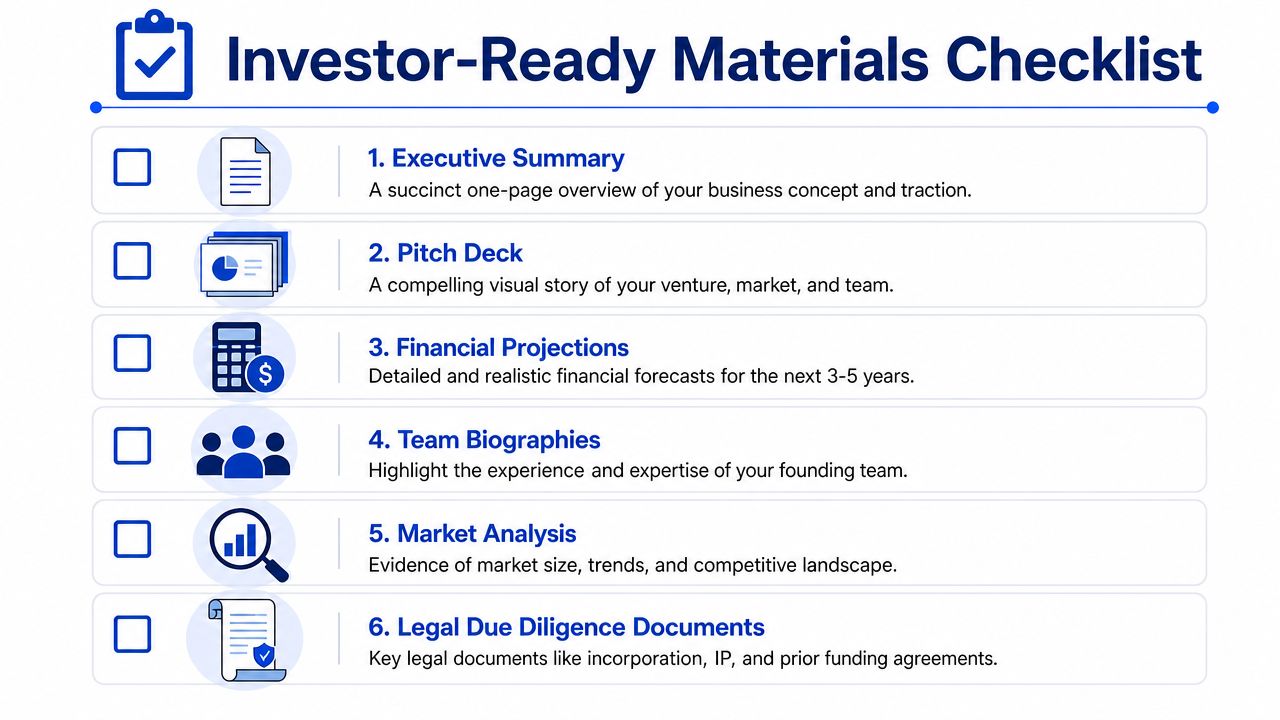
What belongs in the package are six core items: a clear deck, a one page summary, a financial model, a data room, a current cap table, and legal papers. The deck should cover the problem, product, customer, market, business model, team, traction, and use of funds.
- A clear deck: The deck should explain the problem, product, customer, market, business model, team, traction, and use of funds without hype-heavy filler.
- A one-page summary: Angels often share opportunities quickly. A concise summary makes that easier.
- Financial model: The model should show assumptions clearly. Revenue drivers, hiring plans, burn, and runway need to connect.
- Data room: Put core files in a clean folder structure in Google Drive, Dropbox, or another secure platform.
- Cap table: Keep it current. If SAFEs, notes, advisor grants, or old promises exist, they need to be reflected accurately.
- Legal housekeeping documents: Formation documents, stock issuances, contractor agreements, IP assignments, and prior financing documents should be easy to review.
What strong materials signal
Founders often assume the deck does the work. It doesn't. The deck gets attention. The underlying materials create confidence.
A useful market research workflow can combine customer interviews, live prospect feedback, CRM data, and external research tools. Founders refining market sizing or segmentation may benefit from resources that help discover market opportunities before they finalize investor narratives.
The legal file quality matters just as much. If the company's code, brand, or proprietary methods sit at the center of value, investors will want confidence that the business owns them. That means founders should have employee and contractor IP assignments buttoned up and understand the basics of intellectual property rights and types.
A messy data room doesn't just slow diligence. It tells investors that internal controls may also be messy.
A practical diligence checklist
The fastest way to strengthen materials is to review them through an investor's lens:
| Material | Investor question |
|---|---|
| Deck | Why this team, why now, why this market? |
| Financial model | Are the assumptions grounded and internally consistent? |
| Cap table | What exactly am I buying into? |
| Customer evidence | Is demand real or just enthusiastic conversation? |
| Legal docs | Is there hidden cleanup risk before the next round? |
Founders don’t need perfection. They need consistency. Numbers in the deck should match the model. Founder ownership should match board approvals and issuance records. Product claims should align with what customers use and pay for.
Negotiating Key Terms and Deal Structures
The most common mistake in an angel round is treating valuation as the whole negotiation. It isn’t. Structure often matters more than headline price, especially in a company’s first meaningful outside round.
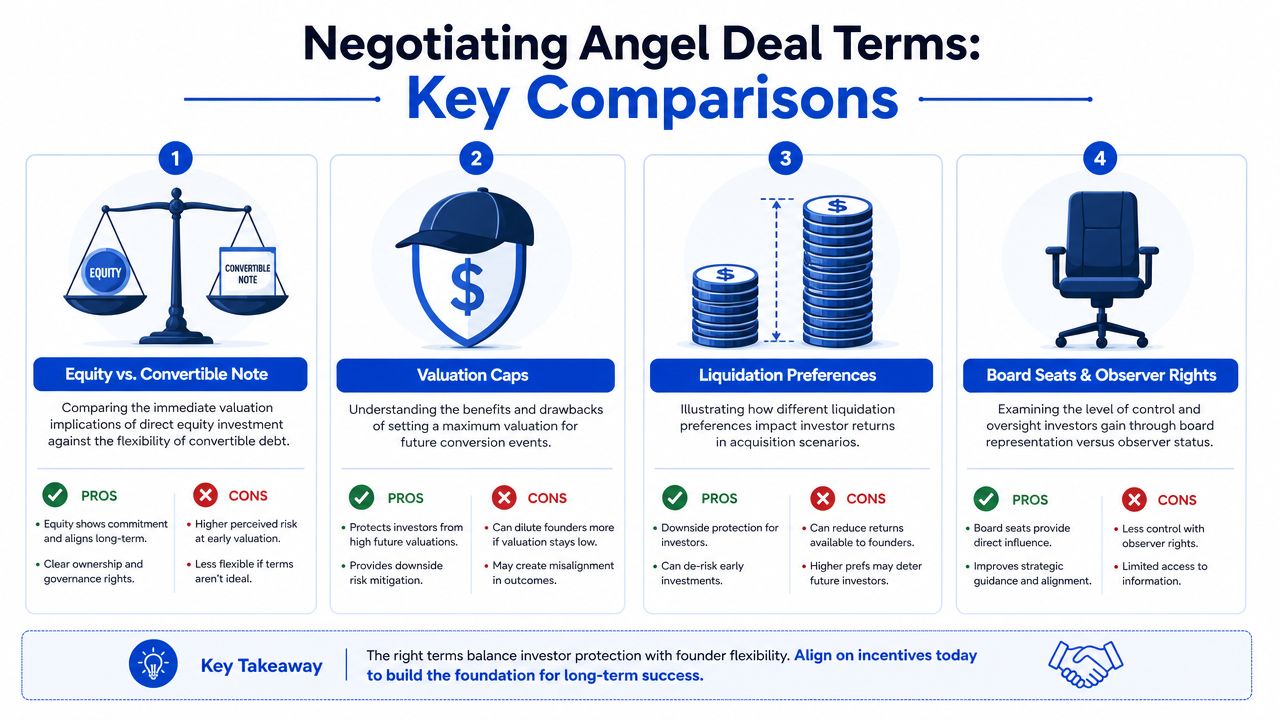
A founder choosing among a SAFE, a convertible note, and a priced equity round is really choosing between different trade-offs in speed, complexity, signaling, and future cleanup.
Choosing the instrument
A SAFE works well when the round needs to move quickly and the company wants to defer valuation pricing to a later financing. It’s founder-friendly in speed, but multiple SAFEs with different terms can create modeling headaches and difficult conversion math in the next round.
A convertible note adds debt features such as maturity and interest. That can give investors more comfort, but it also creates pressure points if the company doesn’t raise the next round on the expected timeline.
A priced equity round takes more work up front. It also creates cleaner governance, clearer economics, and a more mature cap table. For companies raising from a coordinated angel group or building toward a larger institutional seed, that extra structure can be worth it.
Terms that quietly reshape the company
Several terms deserve more attention than they usually get.
- Option pool sizing: Investors may push for an expanded pool before the financing closes. Founders need to model who bears that dilution.
- Pro rata rights: Reasonable pro rata rights can preserve alignment. Overly broad rights can make future rounds harder to allocate.
- Board and observer rights: An observer seat can provide involvement without formal voting power. For many angel rounds, that’s the better balance.
- Protective provisions: Some are routine. Others give minority investors influence over ordinary business decisions.
- Liquidation economics: Founders should understand how preferences affect outcomes in a modest exit, not just a big one.
For founders who need a plain-English explanation of equity preferences and investor rights, this primer on preferred stock is a useful starting point.
Why investor engagement belongs in the term discussion
Terms should reflect behavior, not just economics. Research shows that angels who interact with their portfolio companies a couple of times per month achieve an average return multiple of 3.7x, compared to 2.6x for less-involved investors, as noted in this research summary on angel investment outcomes. That doesn’t mean every founder should hand out board seats freely. It does mean engagement level is a real variable, not a soft one.
A strong term discussion often includes practical questions such as:
- How often will the investor want updates?
- Will they take an observer role or stay informal?
- Do they expect advisory access to management between meetings?
- Are they likely to join future rounds?
Deal instinct: If an investor promises major value-add but resists any clarity around post-close involvement, that promise may not be worth much.
What works and what doesn’t
What works in angel rounds is simplicity with intention. Standard documents. Clear economics. Governance rights proportionate to check size. A cap table that future investors can read quickly.
What doesn’t work is stacking bespoke side deals into a small financing. Founders get into trouble when they agree to special information rights for one investor, a quasi-veto for another, an informal advisor arrangement for a third, and a document set that no future lead investor wants to inherit.
The best angel rounds feel boring on paper. That’s a compliment.
Closing the Round in Washington State
A signed term sheet isn’t the finish line. It’s the point where legal execution starts to matter. A sloppy close can create problems that surface during the next financing, acquisition diligence, or even a routine customer audit.
For Washington startups, the close usually requires two parallel tracks. One is private-company transaction work: finalizing documents, collecting signatures, updating governance records, and issuing securities correctly. The other is securities compliance: making sure the offering fits an exemption and the required filings are made.

The main closing documents
The document set depends on the financing structure.
For a SAFE or note round, the package often includes the instrument itself, board approvals, investor questionnaires, updated cap table records, and closing consents. For a priced round, the package typically expands to include stock purchase documents, updated charter documents, investor rights terms, voting arrangements, and board-level approvals.
Washington founders should pay particular attention to record quality in these areas:
- Board approvals: The board must authorize the financing properly.
- Stock issuance records: Share numbers, prices, and investor names need to match exactly across documents.
- Charter updates: If the company is creating a new preferred class, the amended charter has to be drafted and filed correctly.
- Securities legends and notices: These should match the exemption strategy being used.
Securities law compliance in Washington
Most angel rounds rely on private offering exemptions under federal and state securities law. That usually means the company also needs to make notice filings after the sale, including a federal filing and a corresponding state filing where required.
Washington founders often know the phrase “blue sky laws” but haven’t worked through what that means in a real close. In practice, it means the state still has a role even when the company is relying on a federal exemption. The Washington State Department of Financial Institutions typically enters the picture on notice and compliance issues, and timing matters.
A clean close usually includes this checklist:
- Confirm the exemption path early. Don’t wait until signature week to decide how the offering will be structured.
- Verify investor status. If accredited investor status matters to the exemption, document that process.
- Prepare and file required notices. This often includes a federal notice filing and related state-level filing obligations.
- Update internal records immediately. Minute books, cap table software, and stock ledgers should reflect the deal without delay.
- Check consent thresholds. Prior SAFEs, notes, or charter provisions may require consents before the new round closes.
Clean execution at closing is what turns a signed deal into financeable corporate history.
Why the legal mechanics matter
The upside of angel funding is substantial when the relationship and structure are right. Angel-backed startups are at least 14% more likely to survive for 18 months or more and about 10 percentage points more likely to achieve a successful exit than comparable firms without such backing, according to the NBER digest on how angel investors help startup firms. But founders only realize those benefits if the company remains clean enough for the next investor, buyer, or lender to underwrite confidently.
Founders looking for a broader overview of local considerations around angel business investors can also review this resource on angel investors and startup financing basics.
Life After Funding Your Post-Investment Obligations
The money arriving in the company account changes the job. Investors now expect disciplined reporting, thoughtful governance, and evidence that management can convert capital into progress.
A reliable update cadence solves many issues before they become relationship problems. Monthly or regular investor updates should be brief and consistent: wins, misses, runway, hiring, product movement, customer developments, and specific asks. Angels can help most when founders tell them where help is needed.
What good post-close discipline looks like
Founders should focus on three habits:
- Keep corporate records current: Board consents, equity issuances, option grants, and major approvals should be documented as they happen, not reconstructed later.
- Manage expectations early: If revenue slips, a key hire falls through, or the product roadmap changes, investors should hear it from management first.
- Use investors deliberately: Ask for introductions, recruiting help, customer access, and strategic feedback in narrow, actionable ways.
Why this stage shapes the next round
Future investors review more than growth. They assess whether management runs a trustworthy company. Clean records, stable communication, and credible governance lower friction in diligence and signal maturity.
The founders who benefit most from angel money usually treat their investors neither as spectators nor as shadow managers. They use them as informed allies, keep boundaries clear, and build a company that can survive scrutiny.
Founders raising an angel round in Washington don’t need more generic pitch advice. They need clean documents, practical negotiating judgment, and securities compliance that holds up when the next financing arrives. By Design Law Firm & Legal Consultancy, PLLC advises Seattle and Washington businesses on startup financing, governance, intellectual property, contracts, technology law, and long-term legal infrastructure built for growth. Call us today at (206) 593-1519.