Most founders hear the same bad advice: “copyright the logo and name.” That shortcut sounds neat, but it's legally wrong in the United States, and it leads teams to file the wrong form, use the wrong symbol, and leave the actual brand asset exposed. A logo can sometimes be protected as artwork, but a business name is usually a trademark problem, not a copyright problem.
That distinction matters in practice. A Seattle startup can own the artwork in a custom logo and still lose the name to a competitor if nobody clears and files the mark correctly. The smarter approach is a dual-track strategy, copyright the original visual design, then secure trademark rights in the name and, where appropriate, the logo as a source identifier.
The Copyright vs Trademark Distinction
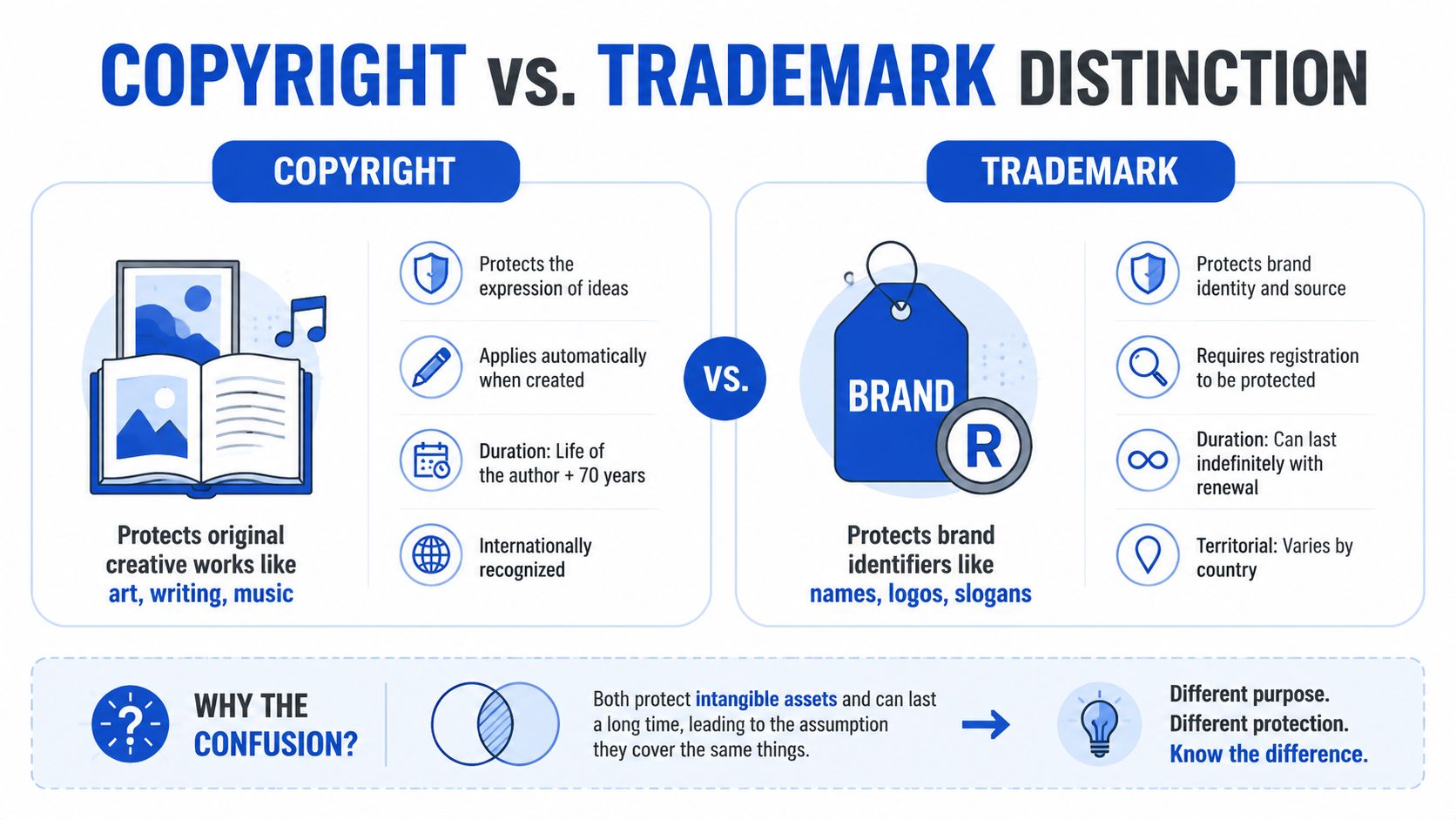
The biggest misconception is simple, and it causes most bad filings. In the United States, a name itself cannot be copyrighted. The Copyright Office says copyright does not protect “names, titles, slogans, or short phrases,” which means a business name is not the kind of creative work copyright law is built to cover. The legal path for a name is usually trademark, because trademark law is designed to protect brand identifiers used in commerce, not creative expression. See the U.S. Copyright Office's explanation of what copyright does and does not protect in its business FAQ, and compare that with the broader IP framework discussed in Trademark vs. Copyright vs. Patent.
Why the confusion keeps happening
Founders often see a logo and a name together, then assume one filing covers both. It doesn't. Copyright can protect the original artistic choices in a logo, while trademark can protect the name and, in some cases, the logo when it functions as a brand source indicator.
Practical rule: if the asset answers “who created this art,” think copyright. If it answers “which company is this,” think trademark.
A coffee startup is a clean example. A hand-drawn cup illustration with original shading and typography can qualify as copyrighted artwork once fixed in a tangible form. The company name on the cup, however, is protected through trademark use and registration, not through a copyright application.
That split is why founders waste money when they file only one way. A copyright registration for a logo won't stop a competitor from using a confusingly similar company name. A trademark filing for the name won't automatically cover the creative expression in the logo artwork either.
The clean way to think about it is this. Copyright protects expression. Trademark protects identity. If those two ideas stay separate from the start, the brand strategy gets much stronger and far less expensive to fix later.
Registering Your Logo with the U.S. Copyright Office
A logo is the part of the brand that can sometimes be copyrighted, but only if it has enough original artistic authorship. The U.S. process is built around the artwork itself, not the business identity. For founders, that means the first question is whether the logo is a visual work that can be fixed in a tangible form, such as a digital file or sketch, before any filing even starts.
The filing path for a logo
For a U.S. logo registration, applicants typically use the Copyright Office's electronic system and select “Work of the Visual Arts.” The public filing fees described for 2026 are $45 for a Single Application and $65 for a Standard Application. Those fee tiers matter because the choice of application type affects cost, and the wrong selection can slow the filing down without adding any protection benefit.
Copyright protection exists automatically once the work is fixed, but registration still matters because it strengthens enforcement and is generally required before a lawsuit for infringement. In practice, founders should treat registration as the record that proves ownership, not as the thing that creates ownership from scratch.
A sensible workflow looks like this:
- Prepare the final logo file. Keep the original sketch, layered design file, and final export together.
- Choose the correct work category. For most logos, that means the visual arts path.
- Submit the application and deposit material. The Copyright Office needs the work itself, not a description alone.
- Save the certificate and filing records. Those records become important if the logo is copied later.
The copyright term for a visual artwork can last for the life of the creator plus 70 years for works created after January 1, 1978. That makes copyright valuable for the artwork itself, but it doesn't turn the logo into a substitute for trademark protection.
A good brand file should also keep the logo aligned with the company's broader asset system. Teams that manage drafts, versions, approvals, and usage rules in one place tend to avoid preventable mix-ups, and a practical reference on that discipline is stop brand chaos and scale culture.
A short video walkthrough can also help founders understand the registration flow before they file.
Securing Trademark Protection for Your Business Name
A business name is protected the way a source identifier is protected, through trademark law. That means the work starts before the application, not after it. A founder who skips clearance or guesses at the class selection is usually the founder who gets an office action, a conflict, or a narrow registration that doesn't cover the actual business.
The trademark filing sequence that actually matters
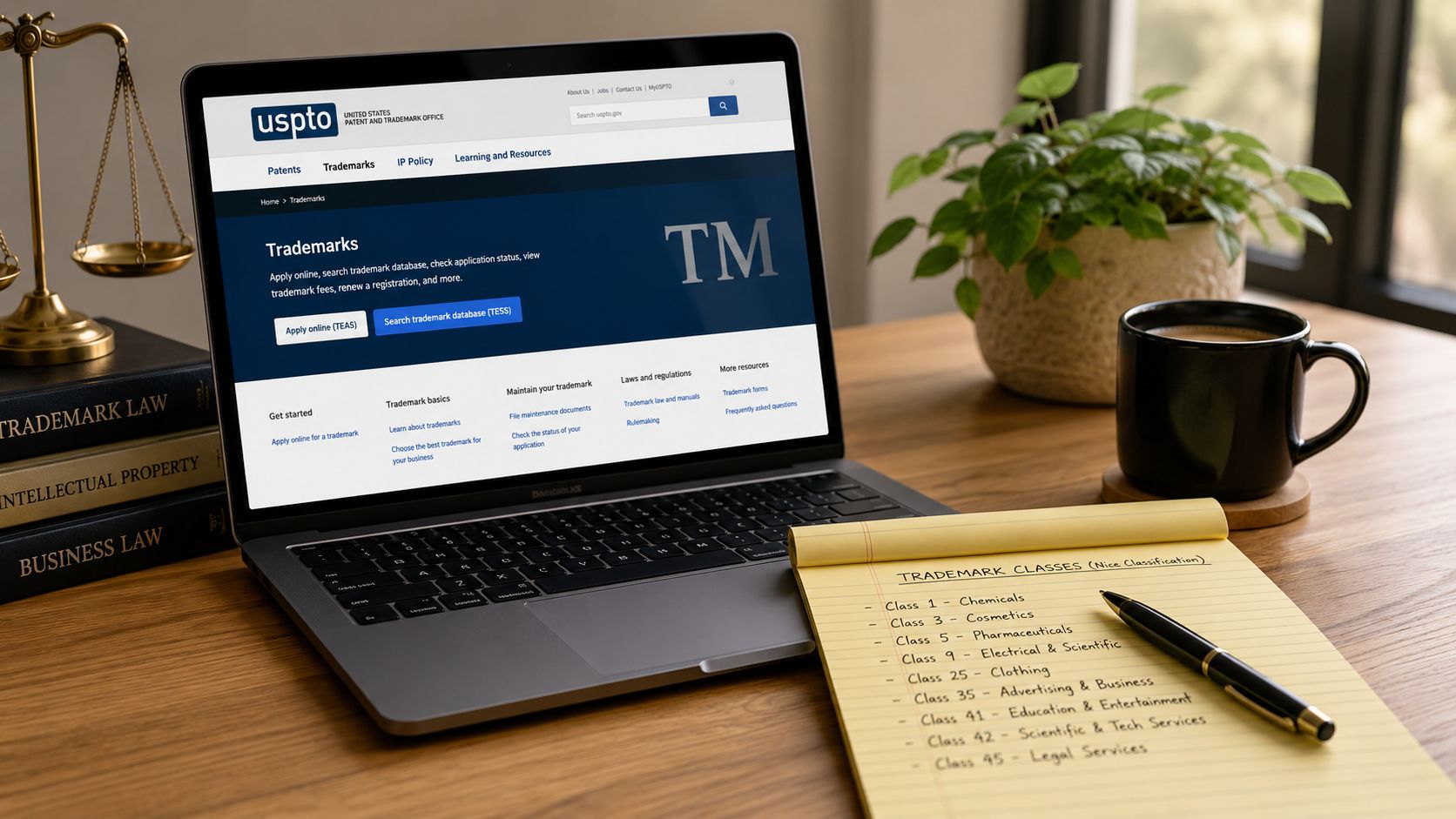
A practical trademark filing starts with a clearance search. That search checks whether a similar name is already in use for related goods or services, because trademark rights turn on likelihood of confusion, not just whether the exact spelling is available. After that, the applicant identifies the correct classes, submits the mark through the trademark office portal, and responds to any examiner questions during review.
The class choice is the place where many startups get trapped. One class may cover the company's current service line, while another class is needed for the product category the business plans to launch next. If the filing only covers the logo image or only the first use case, enforcement can become patchy fast.
A narrow filing can look fine on paper and still leave the company exposed in the market.
For Washington founders, this matters even more because a local launch often becomes a regional or national brand faster than expected. Trademark filing should be matched to where the company sells, plans to sell, and licenses its brand. A useful companion resource on that process is how to trademark a logo.
The examination phase in the UK guidance cited here can take up to 12 weeks, and objections generally must be answered within 2 months before the application can move forward. That timeline illustrates the broader point, trademark review is not instant, and founders should plan for back-and-forth with the office rather than assuming a clean approval.
Symbols and timing
The ™ symbol can be used before federal registration is granted, because it signals a claim to trademark rights. The ® symbol is different. It belongs only after the registration is granted. Using © for a name is a common mistake, because that symbol points to copyright, not trademark.
If the filing is part of a broader launch plan, the brand should also be documented in a more complete operating system. For founders building that framework across naming, design, and internal approvals, IP protection without a lawyer is a useful comparison point.
Comparing Copyright and Trademark Scope
Copyright and trademark can overlap on a logo, but they protect different interests and operate on different clocks. Copyright focuses on the creative expression in the artwork. Trademark focuses on whether the logo or name identifies the source of goods or services in the marketplace. That difference is the reason a founder can own a logo design and still need a separate trademark strategy for the brand identity wrapped around it.
Copyright vs Trademark Comparison
| Feature | Copyright | Trademark |
|---|---|---|
| What it protects | Original creative expression in artwork, including a logo design when it qualifies | Brand identifiers such as names and logos used to identify source |
| Best use case | Preventing copying of the artistic design itself | Preventing confusingly similar brand use in commerce |
| Registration path | U.S. Copyright Office | USPTO trademark system |
| Duration | For a qualifying visual artwork, life of the creator plus 70 years for works created after January 1, 1978 | Can continue with proper maintenance and continued use |
| What it does not cover well | Business names and short phrases | The creative authorship of the artwork as such |
A strategic takeaway is that a logo can sometimes receive both forms of protection. The artwork can be copyrighted, and the logo can also serve as a trademark if it functions as a source identifier. A name, by contrast, usually lives in trademark territory only.
That is why a startup should not treat these filings as interchangeable. Copyright is strongest when the issue is copying the design file. Trademark is strongest when the issue is marketplace confusion, fake affiliation, or brand impersonation. Different problems need different tools.
Founders who want a broader operating view usually benefit from a structured IP review instead of piecemeal filings. A helpful companion resource on the bigger framework is brand protection strategy. It fits the practical reality that brand rights are strongest when the legal pieces line up with how the company uses the mark.
Common Pitfalls and How to Avoid Them
One startup team in the Puget Sound launched a strong brand, filed a copyright application for the logo, and printed © beside the company name on its website footer. Weeks later, a competitor opened under a confusingly similar name in an adjacent market. The team had protected the artwork, but it had not protected the identifier customers remembered. That mistake is common, and it’s expensive to unwind.
The three errors that keep showing up
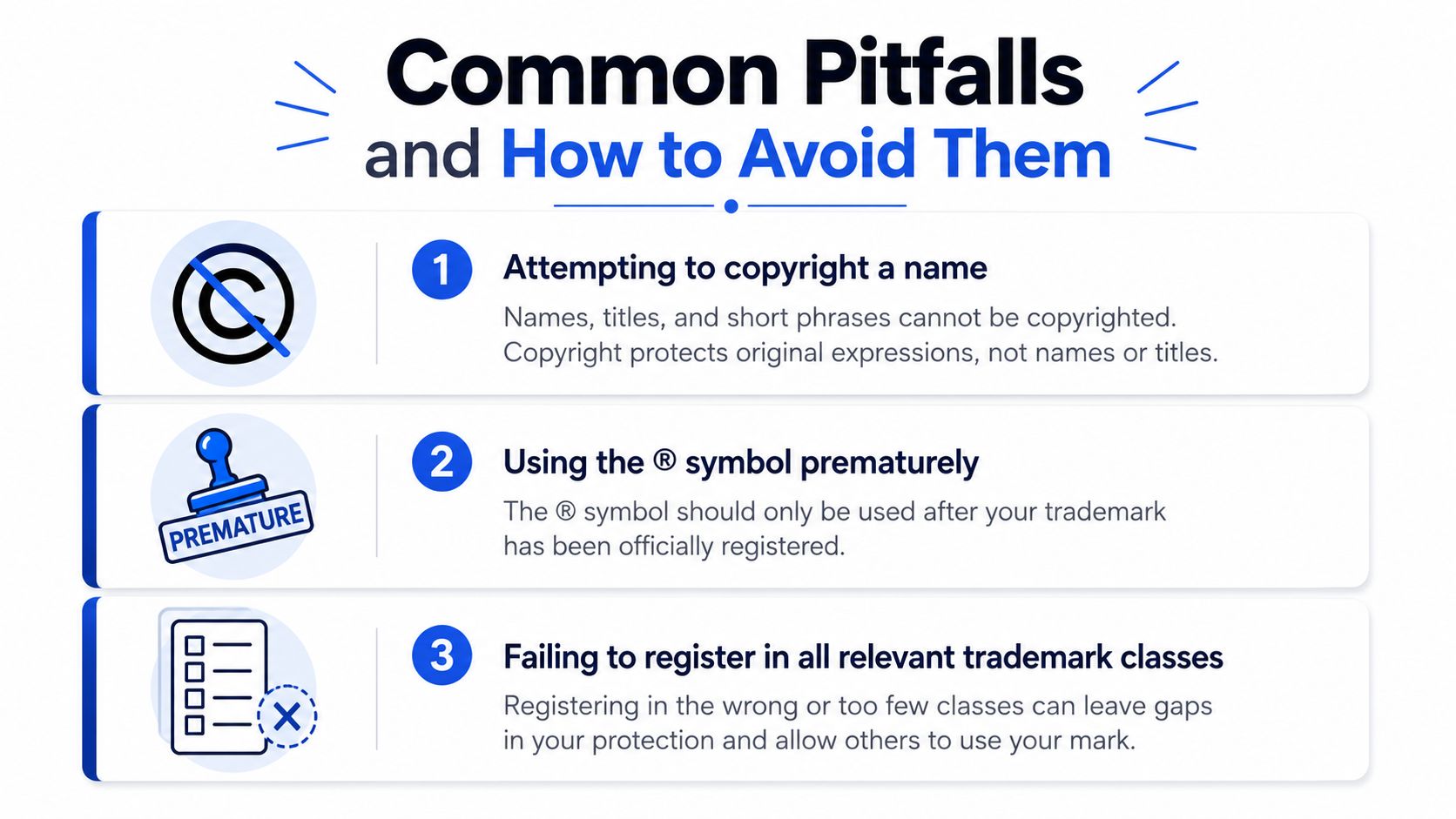
The first error is trying to copyright a business name. That doesn’t work in the United States, because names and short phrases are outside copyright’s core scope. The fix is to shift the name into trademark planning immediately.
The second error is using the ® symbol too early. That symbol is not decorative, and it doesn’t mean “this brand feels protected.” It signals that federal trademark registration has been granted. Before that, the safer symbol is ™ for trademark claims and © only for copyrighted creative works.
The third error is skipping relevant trademark classes. A name can be clear in one class and blocked in another. That is where “class gaps” show up, and it’s how a founder ends up with a registration that looks strong until the company expands.
A narrow filing can be worse than no filing if it creates false confidence.
A practical trademark review should include the goods and services sold today, plus the next logical product line. That matters because brand confusion often shows up in adjacent offerings, not just in the company’s primary category. A startup that only files for the first launch artifact often leaves the second launch vulnerable.
For founders comparing DIY options, a plain-language reference such as authors’ legal guide for copyright can help show how copyright notices and registrations are handled in other creative settings. The lesson carries over cleanly, if the issue is artwork, think copyright. If the issue is a name, think trademark.
The most reliable way to avoid these mistakes is to document the brand before launch, choose the right filing path for each asset, and keep the logo and name strategy separate from day one.
When to Consult an IP Attorney
Some filings are straightforward enough for a founder to handle alone. Others are not. The moment an application gets complicated, the cost of a mistake usually exceeds the cost of getting the filing reviewed by counsel before submission.
Situations that call for legal help
A trademark office action is one of the clearest reasons to bring in an attorney. So is a multi-class application, especially when the brand is about to expand into products, software, or licensed merchandise. Washington founders also have state-level business and governance issues that can affect ownership, chain of title, and who has the right to file on behalf of the company.
Complexity also rises when the logo was created by a freelancer, a contractor, or a design studio. In those situations, the legal question is not just who filed first. It’s who owns the underlying rights, whether the assignment language is clean, and whether the company can prove its claim if the brand is challenged later.
For Greater Puget Sound startups, local counsel can help line up naming, ownership, and filing strategy with the company’s broader formation documents. A practical starting point for that kind of support is intellectual property law services.
If the brand is important enough to be on packaging, pitch decks, product pages, and investor materials, it’s important enough to document correctly.
The best time to consult counsel is before the filing becomes a correction project. That’s especially true when the company plans to expand beyond one product line, use both the name and logo commercially, or build a portfolio that needs to survive diligence in a financing or acquisition. A carefully structured filing now is much easier to defend later than a rushed one that has to be patched under pressure.
By Design Law Firm & Legal Consultancy, PLLC helps Washington founders sort out the difference between copyright and trademark, then file the right protection for the logo, the name, and the business behind both. For practical guidance on brand clearance, registration, and ownership structure, visit By Design Law Firm & Legal Consultancy, PLLC and connect the legal strategy to the way your company launches and grows. Contact our law office today at (206) 593-1519.