A founder closes a customer deal from a laptop at Sea-Tac. A sales lead stores the signed PDF in email. Finance saves another copy in a shared drive. Operations never sees the service levels. Three months later, the company misses a renewal notice, auto-renews a software subscription it no longer needs, and scrambles to answer a customer complaint about delivery obligations no one tracked.
That pattern is common in startups and growing businesses. Contracts start as handshake-level momentum, then turn into a scattered mix of redlines, side emails, approval gaps, and forgotten commitments. The legal risk is obvious, but the operational risk is usually worse. Teams lose time searching for documents, miss dates that matter, and sign terms they can't easily monitor after execution.
The financial stakes are real. Poor contract management costs businesses an average of 9.2% of annual revenue, according to statistics attributing the figure to IACCM, now World Commerce & Contracting, summarized by Agiled's contract management statistics. For a mid-sized agency with $5 million in annual revenue, that translates to about $460,000 in leakage from missed obligations, auto-renewals, and unrecovered revenue, based on the same source.
For startups in Seattle, Bellevue, Tacoma, and across Washington, disciplined process isn't enterprise overhead. It's operating hygiene. A lean company may not have legal ops, procurement ops, or a dedicated contracts team. It still needs clean intake, standard terms, approval rules, and a way to know who owes what after signature.
Strong contract management best practices create that structure without burying the business in bureaucracy. They help founders move faster on routine paper, slow down where risk is concentrated, and build a record that investors, auditors, customers, and counterparties can trust. Teams refining signature workflows often also revisit related document execution habits, including DocuSign best practices for law firms, because the signing step is only reliable when the underlying process is sound.
1. Centralized Contract Repository and Digital Management System
A contract repository fixes the first problem most small businesses have. Nobody knows where the latest agreement lives.
When contracts sit in inboxes, desktop folders, Slack threads, and shared drives, the business loses its single source of truth. That creates version confusion, weak handoffs, and missed obligations. A central repository gives legal, finance, sales, and operations one controlled place to find the current agreement, prior drafts, signature pages, and key metadata.
For a startup, this doesn't have to begin with a full enterprise deployment. Some early-stage teams use Airtable, SharePoint, Google Drive with disciplined permissions, or lightweight workflows in Ironclad. Larger Washington companies may pair tools like DocuSign CLM or Lexis+ with broader document systems. The common requirement is consistency, not brand prestige.
Build the repository before buying complexity
A repository works only when the structure is clear. File names should tell a user the counterparty, contract type, effective date, and status. Access should be role-based. Someone should own data hygiene.
Manual tracking creates a lot of preventable mistakes. Ironclad's discussion of contract lifecycle management metrics states that spreadsheet-based manual tracking generates 92% of errors in contract data due to human mistakes. That's one reason a digital system should capture key fields in the background rather than depend on someone updating a spreadsheet after every draft or signature.
Practical rule: If a team member can't find the signed contract and renewal date in under a minute, the repository isn't working.
A startup handling customer terms, vendor subscriptions, and employment documents can start with a simple rule set:
- Use one intake path: Require every new contract request to enter through one form or one shared channel.
- Store only final versions: Keep draft history, but label the signed version unmistakably.
- Capture core metadata: Record party name, effective date, renewal date, owner, and contract type.
- Assign an owner: One person should be responsible for database accuracy, even if others upload documents.
For companies expanding AI-assisted review, the repository also becomes the foundation for tools like AI contract review workflows. Search, extraction, and alerting are only as good as the underlying records. Similar discipline shows up in broader Cloudvara document management best practices for small business, where naming, permissions, and retention structure drive usability.
2. Contract Lifecycle Management With Defined Stages
Many businesses think they have a contract process. What they have is a chain of emails.
A defined lifecycle changes that. Instead of treating every agreement as one long blur from request to signature, the business breaks the work into stages such as request, draft, internal review, counterparty negotiation, approval, signature, performance monitoring, and renewal or termination. Each stage has an owner and a decision point.
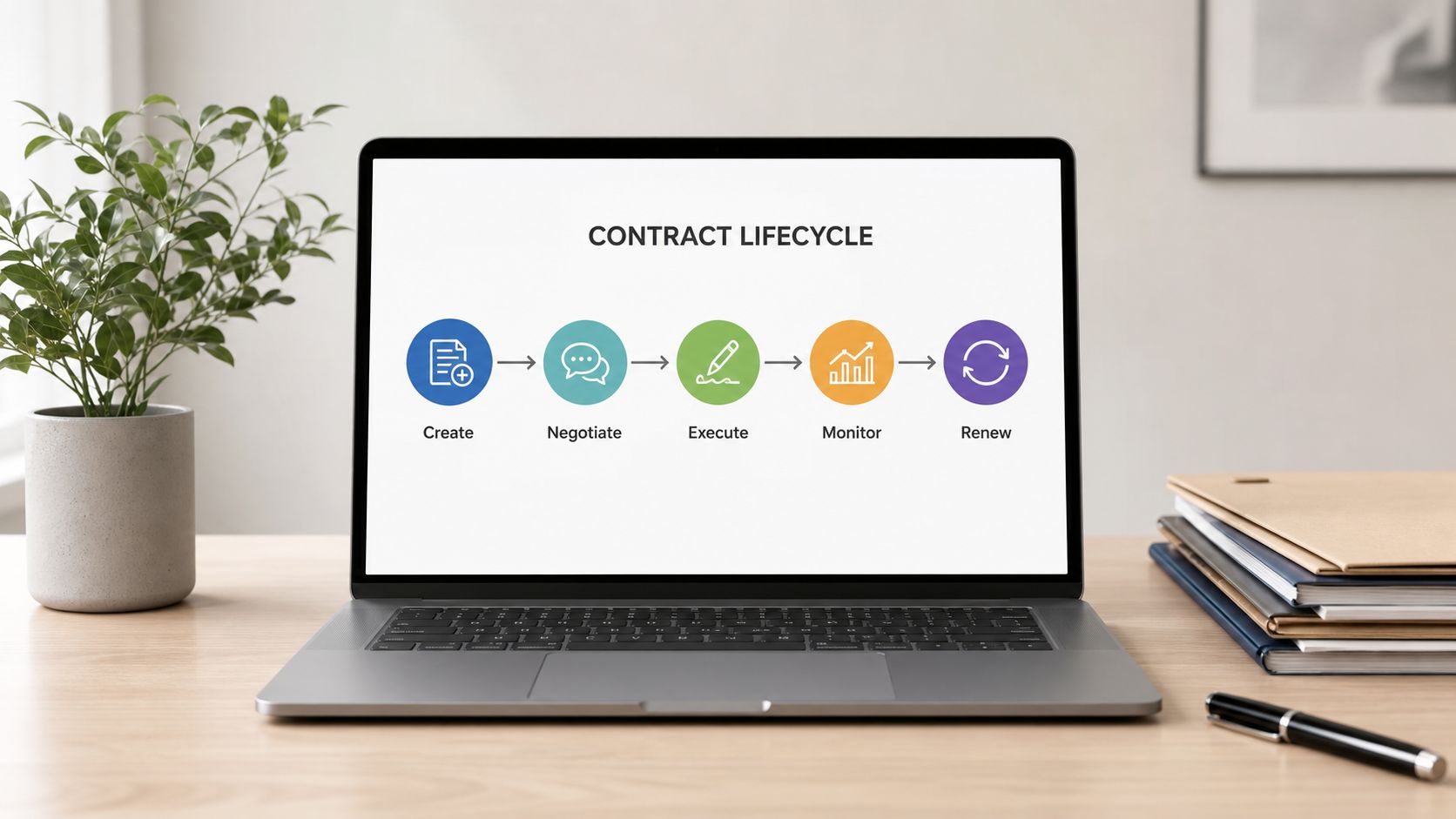
That structure matters because contract work often absorbs more selling time than leadership expects. WeShare's contract management statistics reports that the contract process from request to execution consumes an average of 18% of the selling cycle. For a SaaS company trying to close quarter-end deals, that is not a minor administrative drag.
Stage design matters more than software labels
Seattle technology companies often need different tracks for NDAs, customer MSAs, data processing agreements, and vendor paper. A simple NDA may move on self-service rails. A data-heavy vendor agreement should trigger IT and privacy review. A government contract may need stricter compliance checkpoints throughout performance.
The point isn't to force every agreement through the same lane. It's to define lanes on purpose.
A practical stage model for startups often includes:
- Intake and triage: Decide whether the request fits an approved template or needs custom drafting.
- Draft and review: Confirm business terms, fallback language, and responsible reviewers.
- Approval and signature: Route only the people who need to approve.
- Post-signature handoff: Deliver obligations, billing terms, and dates to finance and operations.
- Renewal decision: Decide early whether to extend, renegotiate, or terminate.
Organizations usually get quick wins from centralization and standardization first, then expand into broader automation, as reflected in HyperStart's 2026 contract management best practices. For a resource-constrained SMB, that staged approach is usually smarter than trying to automate every contract type on day one.
3. Risk-Based Contract Review and Prioritization
Not every contract deserves the same level of legal attention. Treating them all the same is one of the fastest ways to create bottlenecks.
A startup founder in Bellevue doesn't need outside counsel line-editing every routine NDA. That same founder probably does need a deeper review for a financing agreement, an enterprise customer contract with aggressive indemnity language, or a vendor deal involving sensitive data access. Risk-based review allocates time where exposure is highest.
Build a review matrix people can actually use
The strongest systems use plain categories. Low-risk agreements move on approved forms with limited changes. Medium-risk agreements get business review plus targeted legal escalation. High-risk agreements require legal, finance, security, or executive sign-off before signature.
That approach matters because rigid workflows can create their own business problem. The underserved startup angle is real. Early-stage companies often need governance without bureaucratic drag, especially in fast-moving tech sales. Art of Procurement's discussion of enterprise contract management best practices highlights that 40% of procurement delays stem from overly rigid approval workflows. For startups, that means blanket review rules can slow product launches and revenue without adding much protection on low-risk paper.
A practical review system asks one question first. What could go materially wrong if this contract is signed as drafted?
A useful risk matrix usually includes:
- Financial exposure: Large commitments, uncapped liability, or payment structures that are hard to unwind.
- Data and security issues: Access to customer data, regulated information, or critical systems.
- Strategic dependency: Sole-source vendors, exclusivity, or terms tied to a key launch.
- Regulatory impact: Privacy, employment, export, industry-specific compliance, or public sector obligations.
Pacific Northwest software companies often use abbreviated review for standard SaaS MSAs but prioritize data processing agreements, cybersecurity terms, and IP ownership clauses. Small businesses can reinforce this approach with clearer vendor controls and approval triggers, especially when contract review overlaps with vendor management best practices. Cyndra's overview of automated contract review use cases also reflects a growing shift toward reserving human review for the documents that carry meaningful variance or risk.
4. Standard Terms and Master Agreement Framework
A Portland startup closes a new customer on Friday, then spends the next two weeks arguing over indemnity, data use, payment timing, and who owns work product. The next deal raises the same points. So does the one after that. At that stage, the problem usually is not negotiation skill. The problem is that the company has no standard paper, no approved fallback language, and no clear line between business terms and legal terms.
Standard terms turn repeat negotiation into a managed process. For resource-constrained startups and SMBs, that matters because founders, operators, and sales leads do not have time to re-decide the same legal position every time a contract lands in inboxes. A master agreement framework creates consistency across recurring deals while leaving room to tailor scope, pricing, and service details.
This approach works best for contract types you see again and again. Seattle SaaS companies often use an MSA with short statements of work or order forms. Professional services firms tend to use engagement letters with stable terms on fees, ownership, confidentiality, and liability. Hardware, logistics, and vendor-heavy businesses often keep standard legal terms fixed while the commercial schedule changes from deal to deal.
The speed gain comes from discipline, not just templates. If sales can start from approved language, procurement knows which edits are acceptable, and leadership has already decided the company's fallback positions, fewer deals stall on issues that should have been settled months earlier.
A workable framework usually has three parts:
- Base template: The starting form for each recurring contract type.
- Fallback language: Pre-approved alternatives for clauses that customers and vendors often push on.
- Approval boundaries: Clear rules for what business teams may revise and what must go to legal or executive review.
Many early-stage companies make the same mistake. They draft the most aggressive template they can imagine, then watch every counterparty redline it heavily. A better approach is to start with paper that reflects how the business sells in the Pacific Northwest market, then protect the terms that carry real economic or operational risk. For a startup selling into mid-market buyers, that may mean holding firm on payment terms, IP ownership, data security, and liability caps, while giving more ground on procurement wording that does not change the risk profile much.
For recurring customer work, businesses often benefit from understanding what an MSA agreement is before trying to standardize their paper stack. The legal structure should match the way the company prices, implements, and supports its offering. In practice, a clean MSA paired with flexible SOWs or order forms often gives a growing business faster turnaround without giving up control of the terms that matter.
5. Automated Obligation and Milestone Tracking
Most contract value isn't lost during drafting. It's lost after signature, when nobody tracks what the contract requires.
That gap is especially painful for startups and SMBs. They may negotiate carefully, then store the signed document and move on. Renewal dates, reporting duties, service levels, price change windows, insurance requirements, and notice periods fade into the background until something goes wrong.
A practical obligation system doesn't need to start as an expensive enterprise rollout. It does need alerts, owners, and a routine for extracting obligations from the final agreement.

Post-signature leakage is where small teams get hurt
Bindlegal's guide to contract management best practices identifies five core CLM metrics that help prevent value leakage: contract cycle time, value leakage, compliance rate, template utilization, and renewal capture rate. The same source states that organizations fail to capture an average of 11% of contract value during execution when obligations aren't systematically tracked post-signature.
For startups, that often means one of three things: a customer deliverable slips, a software subscription renews without review, or a vendor misses a performance commitment that no one notices in time to enforce the remedy.
A lightweight operating model works better than a heroic memory-based one:
- Extract obligations at signature: Don't assume teams will "remember the important parts."
- Assign owners by function: Finance tracks payment and invoicing terms. Operations tracks delivery obligations. IT tracks security commitments.
- Create lead times: Renewal reminders should arrive early enough to allow a real decision, not on the termination deadline itself.
- Escalate ignored alerts: A reminder no one acts on is just inbox decoration.
Ironclad has noted an underserved gap in practical post-signature tracking for small businesses in its journal coverage of contract management best practices. That observation fits the Pacific Northwest startup market well. Many companies can get meaningful control using Airtable, Monday.com, CRM reminders, and shared calendars before they invest in a heavier CLM platform.
A short visual explainer can help teams frame the post-signature process:
6. Clause Library and Playbook Development
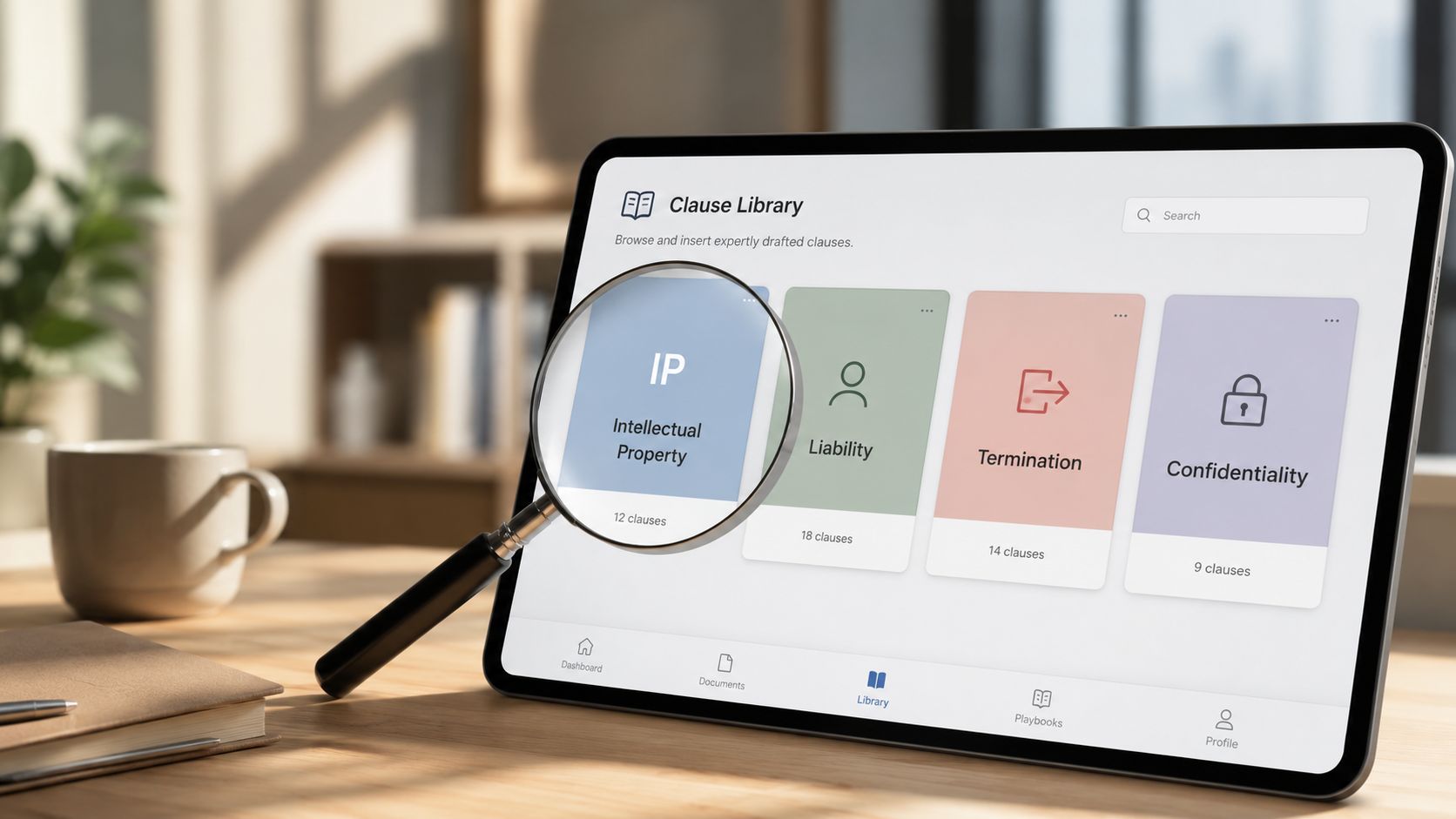
A clause library reduces reinvention. Its primary contribution is reducing accidental inconsistency.
Without one, teams copy language from old agreements, pull terms from unrelated deals, or accept counterparty clauses without knowing the policy trade-offs. A curated library keeps approved language in one place and explains when each option should be used.
Good libraries include judgment, not just text
A useful clause bank does more than store words. It should tell users what the clause does, where it fits, what fallback options exist, and whether the business may concede the point. Seattle tech companies commonly need organized language for confidentiality, data security, IP ownership, limitation of liability, indemnity, audit rights, and service levels.
A playbook turns those clauses into practical decision support. It tells a contracts manager or founder what to accept, what to push back on, and when to escalate.
Negotiation note: The fastest redline is the one answered from a pre-approved playbook instead of a fresh internal debate.
The best libraries are usually organized in two ways at once:
- By contract type: MSA, NDA, vendor agreement, employment agreement, data processing addendum.
- By issue: Liability cap, termination rights, governing law, IP, confidentiality, dispute resolution.
That dual structure matters because negotiators don't think in one dimension. They may be handling a vendor contract but only need fallback language for insurance or confidentiality.
When a company expands its clause governance, dispute terms deserve special attention because they're often copied without much scrutiny. Businesses revisiting fallback language often benefit from a closer look at dispute resolution clauses, especially when they operate across Washington, Oregon, California, or cross-border markets involving Canada. The right clause library keeps that variation intentional instead of accidental.
7. Stakeholder Communication and Cross-Functional Collaboration Framework
Contracts break down when each department sees only its own piece of the problem. Sales wants speed. Finance wants billing clarity. IT wants security review. Operations wants deliverables it can perform. Legal wants risk control. If those groups don't coordinate, the contract may get signed with hidden conflicts baked in.
A cross-functional framework gives each team a defined role at the right point in the process. It does not require everyone to review everything. It requires everyone to review what belongs to them.
Routing should reflect business reality
For a Seattle software company buying a new vendor tool, IT may need to review access permissions, data handling, and integration points before signature. Finance should confirm payment mechanics and renewal terms. The business owner should confirm scope and implementation assumptions. Legal should focus on risk allocation, compliance, and deviations from standard paper.
The strongest systems usually include a simple intake form and a RACI structure. Who requests. Who reviews. Who approves. Who signs. Who manages performance after execution.
Governance also matters at the system level. HyperStart's guidance on best practices describes mature CLM programs as aligning workflows across legal, sales, procurement, finance, and IT while enforcing a single entry point for requests and standardized metadata capture. That matters because most contract failures aren't caused by one bad clause. They're caused by one missing handoff.
A practical startup model often includes:
- One intake channel: No side-door contracting through private email threads.
- Role-based approvals: Sign-off thresholds based on contract type and risk, not title inflation.
- Regular review cadence: Weekly or bi-weekly meetings for stuck contracts.
- Post-signature handoffs: A defined process for finance, operations, and IT to receive what they need.
This is one area where process discipline feels slower at first and then saves time every week after that.
8. Negotiation Strategy and Win-Win Framework
Good negotiation is not endless resistance. It's disciplined prioritization.
Many smaller businesses negotiate from positions instead of interests. They argue over every edit because it feels safer to say no. That often prolongs deals without improving the final risk profile. A stronger approach identifies what the company needs, what the counterparty likely needs, and where trade-offs are possible without creating future pain.
Focus on the clauses that shape the relationship
A Seattle startup negotiating with a cloud provider may care about uptime commitments, data security, and termination flexibility more than abstract wording preferences in boilerplate recitals. A contractor negotiating IP ownership may care most about payment timing and portfolio use language. A services firm may insist on clear scope controls while showing flexibility on invoice formatting or meeting cadence.
That doesn't mean "just be collaborative." It means ranking issues before the first redline call.
A practical negotiation framework often includes:
- Must-haves: Terms the company won't concede because they affect legal exposure or delivery reality.
- Preferred terms: Points worth pressing, but negotiable.
- Tradeable terms: Issues that can move in exchange for value elsewhere.
- Business rationale: Why the company holds each position, in operational terms, not just legal labels.
Most negotiations move faster when both sides explain the business reason behind the ask instead of repeating markup positions.
This matters for startup relationships in the Pacific Northwest, where counterparties may become future customers, channel partners, or investor references. A founder who negotiates hard without becoming erratic preserves optionality. A vendor who solves for the other side's implementation concerns often earns trust that survives the contract cycle.
Win-win negotiation doesn't mean weak paper. It means preserving the terms that matter while avoiding performative combat over issues no one will care about six months after signature.
9. Contract Performance Monitoring and Compliance Verification
Execution is not the finish line. It's the point where the substantive work starts.
A signed contract should trigger a monitoring routine. That is especially true for service-heavy agreements, technology procurement, recurring subscriptions, and vendor relationships involving security, uptime, insurance, reporting, or regulatory obligations. If no one checks performance, the business won't know whether the contract is delivering what it paid for.
Measure what can drift after signature
Compliance monitoring should be tied to actual commitments in the agreement. A Seattle software company might review SLA performance, response times, and required security notices. A manufacturer may track delivery timelines, specification conformity, and certificate of insurance renewals. A professional services firm may compare actual work against scope assumptions to catch change-order issues before they become fee disputes.
This doesn't require a giant dashboard on day one. It requires named owners and a calendar.
Useful monitoring habits include:
- Monthly checks for active obligations: Service levels, reporting duties, milestone dates, and open credits.
- Quarterly contract health reviews: Performance, budget, and relationship status.
- Annual compliance review: Insurance, policy certifications, or audit rights where the agreement requires them.
- Documented issue logs: Dates, missed commitments, notices sent, and corrective actions requested.
For SMBs, this step often creates the first visible return on stronger contract management best practices. Teams stop treating the agreement as a static PDF and start using it as an operating document. That shift matters because a contract no one monitors is often just a record of risk accepted, not value secured.
10. Contract Redline Management and Change Control Process
A Portland startup is trying to close a customer before quarter-end. Sales sends the latest draft to the customer. Finance has approved one payment schedule, the founder approved a liability cap in an email, and outside counsel revised the security terms in a different file. The deal signs. Two months later, the team learns the executed agreement does not match what anyone thought had been approved.
That problem is common in growing companies because redlines often move faster than the approval process. For startups and SMBs with lean legal support, the fix is not a complicated system. It is a clear change control process that shows what changed, who approved it, and which version became binding.
Control the draft, or the draft will control the deal
Version control protects more than legal wording. It protects pricing, implementation timing, renewal mechanics, security commitments, and internal accountability. In practice, one uncontrolled edit can create a revenue issue, a delivery problem, or a dispute over who approved a risk the company never intended to take.
The tool matters less than the discipline. A Seattle SaaS company may handle this in Word with tracked changes and a shared folder with locked permissions. A Spokane manufacturer may use a procurement platform. A larger company may run everything through a CLM system. The common requirement is one approved workflow for drafting, review, and final sign-off.
A workable process usually includes:
- One current draft owner: Assign a single person or function to circulate the live version.
- Tracked changes by default: No silent edits in clean drafts during negotiation.
- Clear file naming rules: Counterparty, agreement type, date, and version number.
- Approval records for deviations: If someone accepts a change to indemnity, payment timing, data use, or limitation of liability, record who approved it.
- Issue tracking outside the document: Keep open business and legal points in a short log so they do not disappear inside comment threads.
- Final-form confirmation before signature: Confirm that the signature version matches the last approved redline.
Startups often cut corners. They rely on email approvals, Slack messages, or a salesperson's memory of what the customer accepted. That may work for a low-risk NDA. It breaks down quickly for MSAs, enterprise SaaS contracts, channel agreements, and vendor terms with security or compliance requirements.
Amendments need the same discipline. An amendment signed six months later can change payment timing, service scope, exclusivity, or termination rights without anyone noticing the effect on the original deal. I have seen companies rely on the base agreement during a dispute, only to find that a later order form or amendment changed the result.
For resource-constrained teams, keep the process simple enough that people will follow it. Require tracked changes. Limit who can send contract drafts externally. Use a short deviation approval matrix. Save every material version in one place. Those steps reduce avoidable errors without adding a heavy administrative layer.
Contract Management: 10 Best Practices Comparison
| Item | Implementation complexity | Resource requirements | Expected outcomes | Ideal use cases | Key advantages |
|---|---|---|---|---|---|
| Centralized Contract Repository and Digital Management System | Medium, requires configuration and integrations | Moderate hardware/software + admin and user training | Single source of truth, faster retrieval, audit readiness | Growing businesses consolidating scattered contracts | Improved access control, versioning, analytics |
| Contract Lifecycle Management (CLM) with Defined Stages | High, process design and tool setup across stages | Significant cross-functional buy-in, CLM tools, training | Consistent workflows, reduced bottlenecks, faster closings | Organizations managing many concurrent agreements | Visibility across stages, standardized decision points |
| Risk-Based Contract Review and Prioritization | Medium, design risk matrix and rules | Legal expertise, scoring framework, periodic calibration | Focused legal review on high-risk deals, faster low-risk processing | Resource-constrained startups and high-volume shops | Efficient use of legal resources, cost reduction |
| Standard Terms and Master Agreement Framework | Medium, initial legal drafting effort | Upfront legal drafting, governance, template maintenance | Faster execution, consistent protections, lower review costs | Frequent recurring transactions (MSAs, SOWs) | Reduced negotiation time, uniform risk posture |
| Automated Obligation and Milestone Tracking | Medium–High, extraction and integration work | Automation tools, integrations with calendars/ERP, data quality | Fewer missed deadlines, proactive renewals, audit trails | Companies with critical deadlines or complex payment terms | Prevents breaches, improves cash-flow planning |
| Clause Library and Playbook Development | Medium, content curation and taxonomy setup | Legal drafting, knowledge management, periodic updates | Faster drafting, consistent clause usage, lower errors | Teams wanting consistent legal language across deals | Speeds drafting, captures institutional knowledge |
| Stakeholder Communication and Cross-Functional Collaboration Framework | Medium, cultural and process change management | Time for meetings, RACI definition, training | Aligned decisions, fewer late-stage surprises, smoother approvals | Organizations needing legal-business alignment | Better risk-awareness, informed negotiation decisions |
| Negotiation Strategy and Win-Win Framework | Low–Medium, training and playbook creation | Training, negotiator preparation, situational research | More collaborative deals, stronger relationships, durable agreements | Strategic partnerships or long-term vendor/customer deals | Builds trust, often yields creative, sustainable solutions |
| Contract Performance Monitoring and Compliance Verification | Medium, monitoring processes and metrics | Ongoing resources for audits, systems integration | Early issue detection, remediation, compliance assurance | Supplier-heavy businesses or regulated industries | Reduces exposure, informs renewal decisions |
| Contract Redline Management and Change Control Process | Low–Medium, establish version control and workflows | Document/versioning tools, discipline, negotiation summaries | Clear negotiation history, reduced ambiguity, controlled amendments | Complex negotiations with many rounds or stakeholders | Prevents unintended changes, preserves negotiation rationale |
Build Your Contract Management Playbook
Contract management usually becomes a priority after something goes wrong. A renewal is missed. A vendor underperforms. A customer dispute turns on language no one flagged during negotiation. Finance discovers payment terms that don’t match the internal quote. By then, the business is paying to fix a preventable process problem.
The better approach is to build a playbook before the pain becomes visible. That doesn’t require an enterprise legal department or a costly software stack from the start. It requires disciplined choices about where contracts live, how they move, who reviews them, and how obligations are tracked after signature.
For startups and SMBs, the smartest first step is usually the one tied to the clearest operational failure. If contracts are scattered, centralize them. If routine paper consumes too much founder time, standardize templates and fallback clauses. If deals stall in review, create a risk-based triage system. If renewals and obligations keep slipping, build alerting and ownership into the workflow. Each improvement reinforces the others.
This is also where many businesses need to resist two common mistakes. The first is overengineering. A five-person company doesn’t need a massive approval tree for every NDA. The second is under-governing. A company handling customer data, recurring subscriptions, and outsourced vendors can’t rely on memory and inbox search forever. Practical contract management best practices sit between those extremes.
That balance matters in Washington’s business environment, where companies often move quickly across software, services, manufacturing, franchise, and regulated-data contexts. A startup in Seattle may need customer paper that closes fast, vendor terms that protect security, and post-signature discipline that keeps obligations from disappearing into operations. A professional services firm in Tacoma may need fee clarity, scope control, and consistent dispute language. A growth-stage company in Bellevue may need all of that plus investor-ready governance.
The strongest contract systems are not the most complex. They are the most usable. Teams know where to start a request. They know which template to use. They know when legal must step in and when business teams can self-serve. They know who owns renewal decisions, performance checks, and deviation approvals. The process becomes ordinary, which is exactly what a sound legal infrastructure should be.
By treating contracts as business systems rather than isolated legal documents, companies reduce avoidable friction, protect revenue, and improve accountability across departments. The result is better than a cleaner paper trail. It is a more durable operating model.
Businesses that want help turning these principles into workflows, templates, approval rules, and governance practices specific to Washington operations can work with By Design Law to build a contract management approach that fits their size, speed, and risk profile.
By Design Law Firm & Legal Consultancy, PLLC helps Washington startups, founders, and growing companies build contract processes that are legally sound and operationally workable. For support with template development, contract review workflows, vendor and customer agreements, data security terms, and practical governance suited for the Greater Puget Sound business environment, contact By Design Law Firm & Legal Consultancy, PLLC. Contact By Design Law Firm PLLC today at (206) 593-1519 for a complementary consultation.